Contents Pilates is often perceived as a women's sport. Small group classes, flexibility, a gentle atmosphere... it's hard to



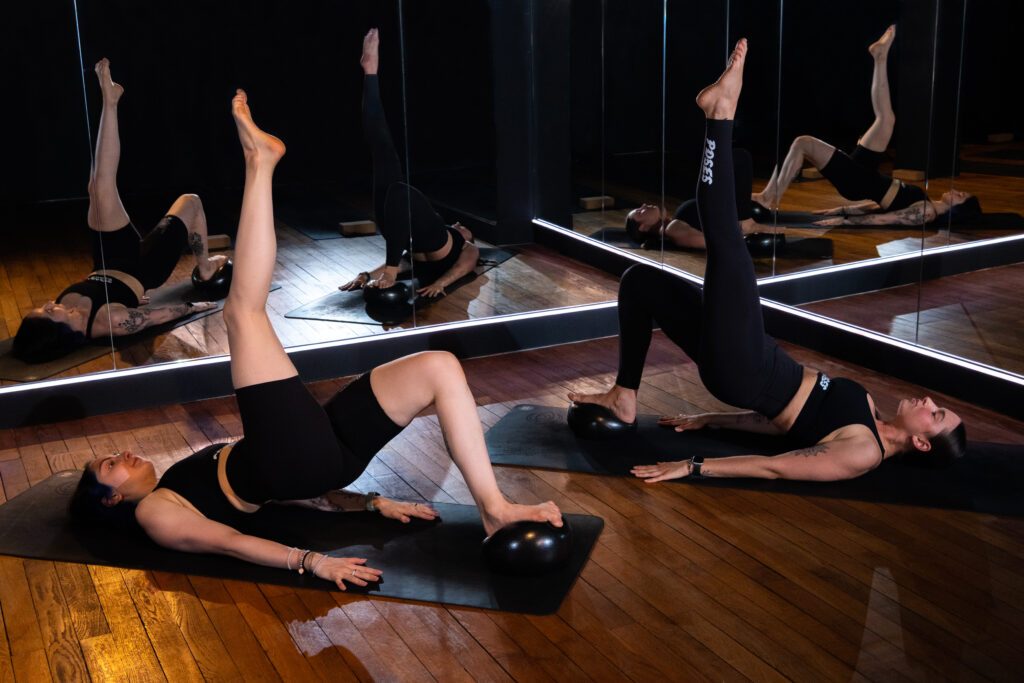
Pilates stands out for its ability to deeply work muscles that are often neglected by traditional sports. Deep abdominals, back muscles, hip stabilisers: these are what make the difference to posture and pain prevention.
Gentle muscle strengthening: Pilates targets the postural muscles without impacting the joints.
Improved posture : A more upright posture, relaxed shoulders, a well-placed pelvis.
Flexibility and mobility Fluid movements increase joint range and reduce stiffness.
Stress management Focusing on breathing helps to calm the nervous system.
Ideal addition to other sports: Running, weight training, swimming; Pilates strengthens stability and coordination.
Before starting the exercises, it is useful to understand the principles that underpin the method. Joseph Pilates had formalised a precise approach to movement, based on 5 essential pillars.
Every movement is synchronised with a deep inhalation or exhalation. Breathing engages the abdominal muscles and oxygenates the tissues. In Pilates, we often inhale before the effort and exhale at the moment of contraction.
All movement originates from the «powerhouse»: the deep abdominals, pelvic floor, and lumbar muscles. Before each exercise, engage your core by gently drawing your navel towards your spine.
Pilates is not an automatic practice. Each exercise demands total attention to movement, body position, and breathing. This is what distinguishes it from a simple gym session.
Quality over quantity. It's better to perform 6 perfect repetitions than 20 sloppy movements. Muscle control protects joints and optimises results.
The movements flow smoothly and continuously, without jerks. The aim is a body that moves with grace and efficiency, not brute force.
A brief 5-minute warm-up is enough to prepare the body. Do arm circles, ankle rotations, and a few side bends. The goal is to mobilise the joints and activate circulation.
For most of the exercises on this list, you only need a non-slip mat. To take things further, a Pilates ball or ring can enhance certain sequences, but these are optional accessories.
These exercises are suitable for people who are new to Pilates or returning after a break. They work on the foundations: core strength, pelvic stability, body awareness.
This exercise strengthens the abdominal core and hip flexors. Perform 4 sets of 10 repetitions.
A fundamental exercise for abs and mobility. Aim for 4 sets of 12 repetitions.
The iconic Pilates exercise. It strengthens the core and develops respiratory endurance. Goal: 100 arm pulses.
Excellent for stretching the spine and strengthening the abdominals eccentrically. Do 4 sets of 6 repetitions.
Ideal for neck tension, and for strengthening the back and shoulders. Do 4 sets of 10 repetitions (5 on each side).
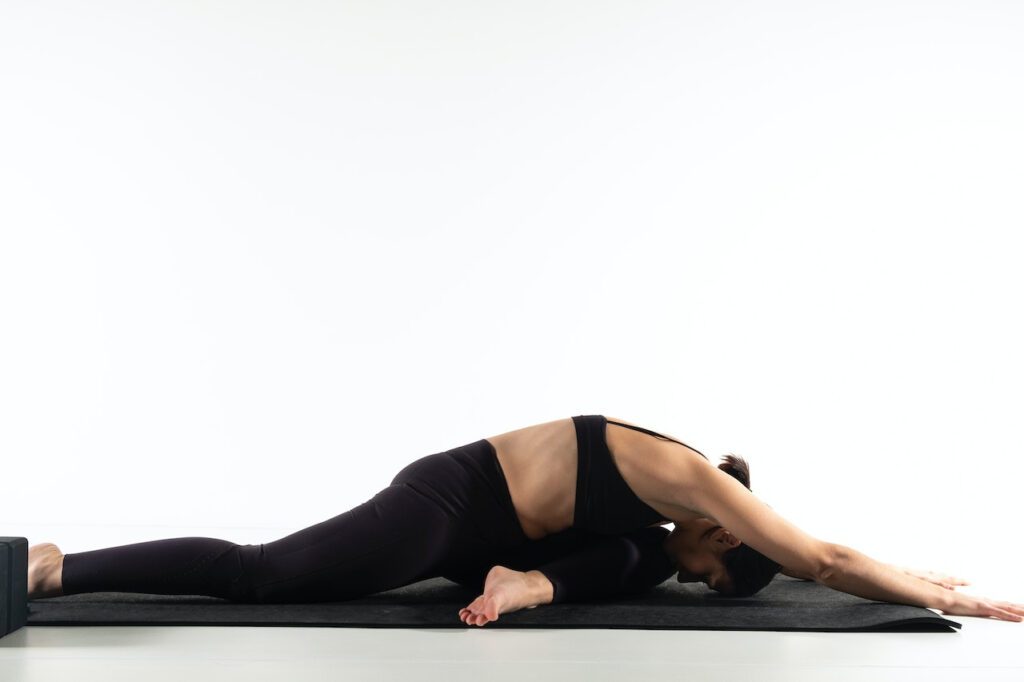
These exercises require good body awareness and an already active core. If you have been exercising for less than 4 weeks, consolidate the previous exercises first.
Strengthen the obliques and abdominals by twisting the torso. 4 sets of 10 breaths.
A prone exercise that strengthens the entire posterior muscular chain and improves coordination. 4 sets of 30 seconds.
Tones the legs, hips, and obliques. 4 sets of 10 repetitions on each side.
Strengthens the obliques, abdominals, and hip flexors. 4 sets of 10 repetitions.
Stretches the hamstrings and strengthens the hips and abs. 4 sets of 10 breaths.
These exercises require well-developed back and abdominal musculature. Do not attempt them if you have not firmly mastered the intermediate movements.
Demanding exercise that works core strength and spinal mobility. 4 sets of 6 repetitions.
The most recognisable move in advanced Pilates. It tests balance, abdominal strength and mobility. 4 sets of 6 repetitions.
Works hip stability, the back and the core. 4 sets of 10 repetitions.
Strengthens the thighs, obliques, abdominals and hip flexors. 4 sets of 10 repetitions.
Yes, the vast majority of these exercises can be done at home without any specific equipment. A non-slip mat is sufficient to get started. Pilates on the floor is a practice that can be done from your living room.
For beginners, two or three 20-30 minute sessions per week are enough to start seeing results. Regularity is more important than duration. It’s better to do 20 minutes three times a week than one hour-long session at the weekend.
If you wish to take it further, group classes in a studio offer valuable guidance. A coach corrects your posture in real-time, which speeds up progress and prevents compensatory movements.
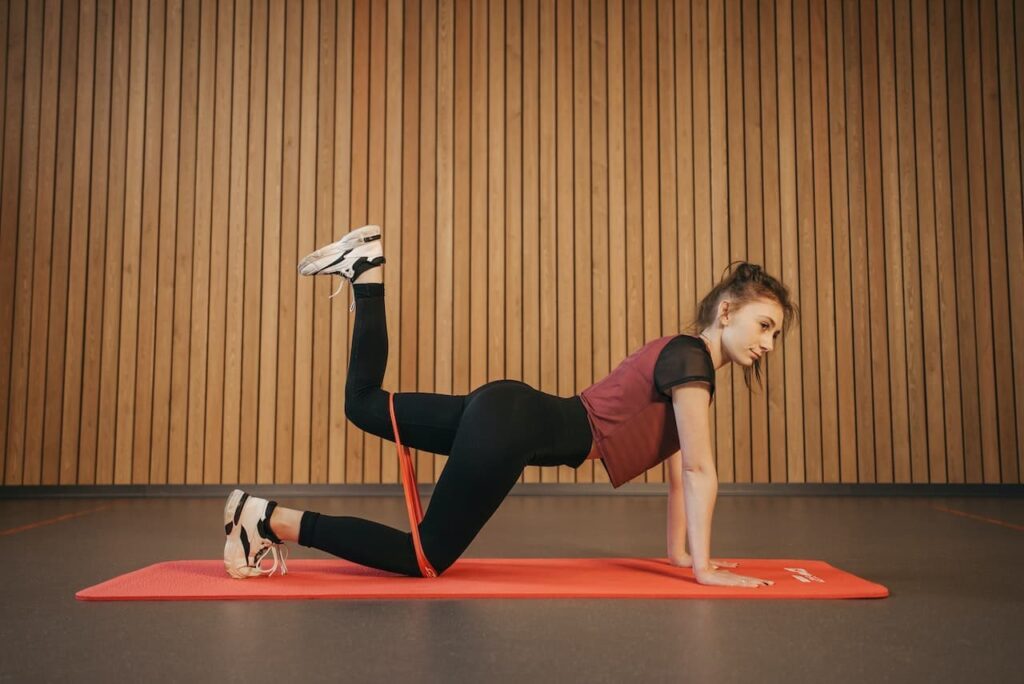
The fundamental Pilates exercises are the Hundred, the Roll Up, the Double Leg Stretch and the Criss Cross. They work the deep abdominal muscles, breathing and pelvic stability. These are the first exercises to master before moving on to more complex movements.
10 minutes a day is a good start. You'll already feel an improvement in posture and a reduction in tension within a few weeks. For more visible results in muscle strengthening and body shaping, aim for 3 sessions of 30 minutes per week.
Yes, in most cases. Pilates is even recommended for strengthening the paravetebral muscles and relieving pain related to scoliosis. Some exercises need to be adapted according to the degree of curvature. Speak to your doctor and practice with a coach who knows your condition.
The 5 principles of the Pilates method are breathing, centering, concentration, control, and flow. They are detailed at the beginning of the article. These principles guide every movement and distinguish Pilates from a simple gym session.
You wish gain flexibility, refine your figure and improve your posture ? THE Pilates in Paris 8 will be your favourite sport for a gentle body workout! It's possible at POSES.
Strengthen your body with pilates flow. Our Pulse&Pose® sequences are 50-minute sessions that mix isometrics, bodyweight exercises and strengthening. Furthermore, thanks to our movements, your deep muscles and balance are solidified. Take full advantage of the exercises that help you gain mobility, stability et strength under a dim light with some coaches who will take care to bring out the benefits of pilates on your body.
Strengthen your body with a Pilates session at POSES.