Contents Pilates is often perceived as a women's sport. Small group classes, flexibility, a gentle atmosphere... it's hard to



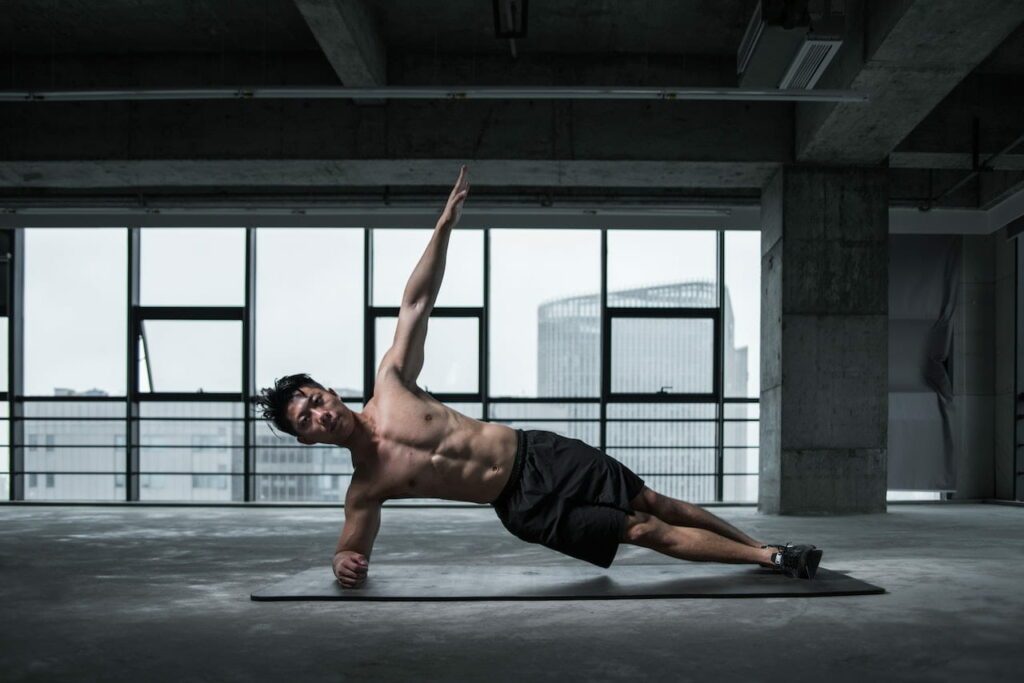
Pilates is often seen as a woman's sport. Small group classes, flexibility, a gentle atmosphere… it's hard to imagine men doing it. And yet, this image doesn't reflect the reality of the discipline.
Pilates was created by a man, for men, and its benefits are particularly suited to male physical needs. Whether you lift weights, run, or don't do any sport, this guide explains what Pilates can really do for you.
Joseph Pilates was born in Germany in 1883. A keen athlete, he participated in boxing, gymnastics and skiing. During the First World War, while a prisoner of war in England, he developed his method to keep his fellow inmates fit. His first equipment? Hospital bed springs.
After the war, Joseph Pilates settled in New York. His studio attracted boxers, gymnasts and male dancers. The method, which he then called the «Contrology», is a strength and control workout, far from the image we have of it today.
It was only in the 1980s-1990s that Pilates became massively associated with women. Studios began to target this audience, and marketing followed. Within a few decades, the discipline lost its athletic and masculine image.
But the method, it hasn't changed. It remains Demanding, precise, and effective for all body types. Today, athletes like Cristiano Ronaldo and LeBron James incorporate it into their routine. It's no coincidence.
At the gym, you work your biceps, pectorals, and quadriceps. These are superficial muscles. Pilates, on the other hand, targets deep muscles: the transverse abdominis, multifidus, and pelvic floor. These muscles aren't visible in the mirror, but they stabilise every movement you make.
A strong core improves everything else. Whether you're lifting a bar or running, it's your core that transmits force. Neglecting these deep muscles is like building on fragile foundations.
Men often have less joint mobility than women. The hips, hamstrings, and thoracic spine are particularly stiff areas. This stiffness increases the risk of injury and limits performance.
Pilates works on your range of movement actively. You don't passively stretch; you control each degree of flexion and extension. In the long term, it's a Effective protection against tendonitis, lower back pain and herniated discs.
Pilates improves stability, coordination, and body awareness. These three qualities make a difference in any sport. A runner gains in stride efficiency. A cyclist improves their position. A team sports player develops better stances.
The benefits are tangible and measurable. And unlike other forms of complementary training, Pilates does not fatigue the body: it regenerates it.
The two disciplines do not do the same thing. Weight training develops superficial muscles and increases muscle volume. Pilates strengthens deep muscles and improves coordination. One is not better than the other: they are complementary.
What the room gives you: Explosive strength, volume, and muscular endurance on targeted muscle groups.
What Pilates gives you Of stability, mobility, balanced musculature and better management of your body in space.
Many men who practise both quickly notice the difference. Less back pain, better posture, smoother movements. Two Pilates sessions a week are enough to start feeling a change.
These exercises can be done without any equipment. They provide a good foundation for discovering the method at home before joining a studio class.
Lying on your back with your legs in the air at a 90-degree angle, lift your head and shoulders. Pump your arms by your sides for 100 counts, coordinating with your breathing: 5 counts inhaling, 5 counts exhaling.
Objective: Activate the deep core and develop abdominal endurance.
Lying on your back with arms stretched above your head. Exhale, slowly curling your back, vertebra by vertebra, until you touch your feet. Rest in reverse to return. It's much harder than it looks.
Objective: Stretch the posterior chain while strengthening the abdominals.
Lie on your front with your hands flat under your shoulders. Inhale, then lift your head, chest, and arms off the floor, keeping your legs on the floor. Exhale to return.
Objective: strengthen the back muscles and improve thoracic extension, which is often limited in those who spend long hours sitting.
Body aligned from head to heels, abs engaged, breathe normally. Pilates offers several dynamic variations: alternating leg lifts, hip rotations, side planks. Each variation targets a different aspect of stability.
Objective: Strengthen overall core engagement and trunk stability.
Lying on your back, knees bent, feet flat on the floor. Lift your hips, squeezing your glutes and engaging your core. Hold for a few seconds, then slowly lower yourself back down.
Objective: to strengthen the lower back and glutes, two areas often under-stimulated in men who do strength training.
Floor exercises can be done at home. But to progress quickly and correct your movement habits, a studio class remains the best starting point. A coach sees what you don't yet feel. They adjust your positioning and guide you towards the correct muscles.
Once the basics have been mastered, you can alternate between studio sessions and independent practice at home. The two are complementary.
Two to three sessions per week are sufficient to see results. Joseph Pilates himself used to say: in 10 sessions, you will feel the difference. In 20 sessions, you will see it. In 30 sessions, your body will have changed.
You don't need to abandon your usual programme. Pilates integrates easily as a supplement, twice a week. Think of it as an active recovery session.
Most men trying Pilates for the first time are surprised. Not by the difficulty of the exercises, but by the muscles worked. You'll be engaging areas you've probably never targeted before.
The next day, you'll know exactly where your deep muscles are. It is often the first time men become aware of this part of their body.
At POSES, we offer Pilates Flow sessions suitable for all levels. Our 50-minute classes combine the principles of the Pilates method with the energy of movement, in a welcoming and non-judgemental atmosphere.
Would you like to take it a step further? Our Monceau and Voltaire studios also offer Reformer classes, using Joseph Pilates’s iconic equipment. It’s the ideal way to make progress with resistance and precision, under the guidance of our certified coaches.
Ready to discover what Pilates can do for your body? Book your first session, it's the only way to find out.