Contents Pilates is often perceived as a women's sport. Small group classes, flexibility, a gentle atmosphere... it's hard to



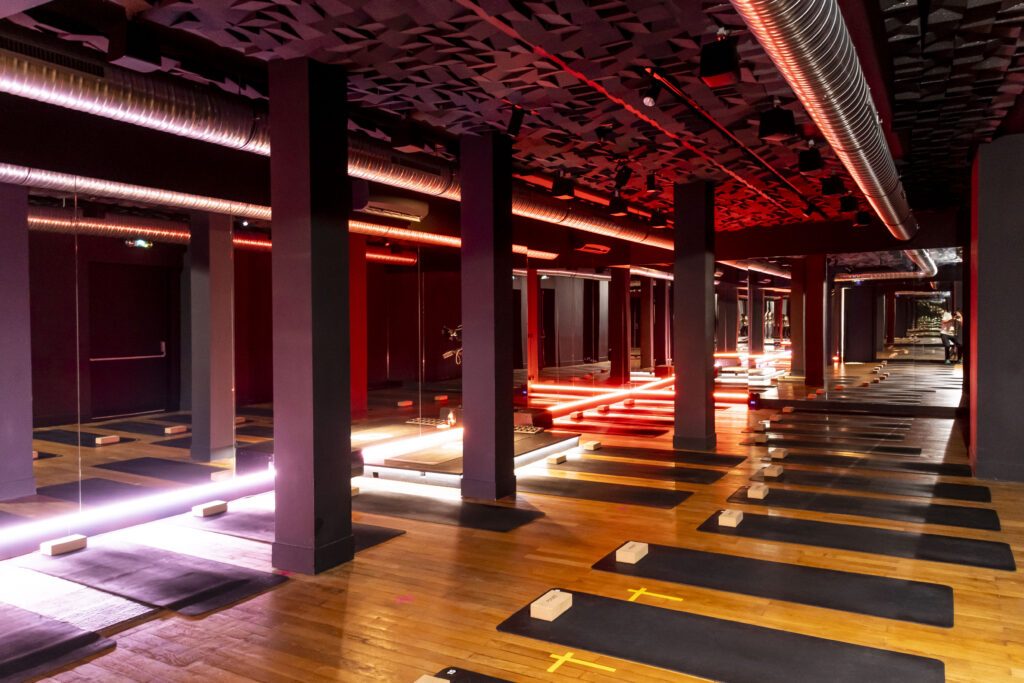
You're looking for simple beginner Pilates exercises to get started without injuring yourself. Pilates strengthens the core, improves posture, and relaxes the body. You can start at home, with minimal equipment and accessible movements.
This article will guide you step by step. You'll discover the basics, a selection of floor and standing exercises, and then easy-to-follow mini-routines. The aim is to create a gentle, regular, and effective practice.
Wondering where to start and how long to practise? Want to feel results without pressure? This article is for you.
You're keen to try Pilates... but you don't know where to start? Good news: you don't need to be flexible, athletic, or “already strong.” Pilates is precisely the place where you learn to feel, to breathe, to move without pushing yourself too hard.
Before you dive into beginner Pilates exercises, a few basics can make all the difference. They stop you from straining, they make the moves more effective – and most importantly, they give you confidence. Yes, that little click that makes you think: Right, I can do that.
Pilates is based on very accessible principles. No complicated jargon, we promise. Think of reference points, like invisible threads guiding your body.
The key takeaways
At first, it might seem subtle. That's normal. You're fumbling about, doubting yourself a little, then one day – bang – you feel your deep abdominal muscles working without strain. A small victory. And that changes everything.
Beginner Pilates should remain comfortable. Yes, there is effort. No, there should be no sharp pain. If something pulls too much, adapt it. Always.
Keep these reference points in mind:
You have the right to start small. Even very small. Frankly, the best progress starts there.
A few useful reflexes:
Pilates isn't about performing. It's about building. Gently, intelligently, almost behind the scenes. And that's precisely how the body changes – a more stable posture, a freer back, finer sensations.
In short… you'.
Let's be honest: to start beginner Pilates, you don't need an action-movie arsenal. Pilates is more about “less is more.” A good mat, a bit of space, and you're good to go.
That said, the right gear can really change your comfort. And when it's comfortable, you last the distance. No mystery.
If you only remember one thing: the rug counts. On a mat that's too thin, you feel every vertebra, every knee... and you end up thinking Pilates is chic torture. No thanks.
Here's the basis, simple and effective:
Little detail that changes everything: non-slip socks if you slip on the carpet or the floorboards. It prevents the “Bambi on ice” mode when you're standing.
The accessories are not mandatory, but they are super useful for two reasons:
The idea isn't to add difficulty for the sake of suffering. It's to add benchmarks.
The most useful accessories when starting out:
And if you're wondering “what do I take first?”: start with the rug, and then softball. This is the simplest, most beginner-friendly duo, and the one used most often.
Final point: don't fall into the trap of “if I get kitted out, I'll get into it”. We know the type. It ends up as living room décor. Start with the bare minimum, get into the swing of things, then add an accessory if you feel the need. It's smarter, and it works in real life.
I know. You're eager to jump straight into beginner Pilates exercises. The problem is, without a warm-up, your body is “cold,” a bit stiff, sometimes stressed... and it compensates. The result: you strain where you shouldn't, particularly in your lower back and your neck.
Good news: in Pilates, the warm-up doesn't last 20 minutes. It's short, intelligent, and gets you in the right frame of mind. Think of it as an “on” button for breath, core, and posture.
The aim isn’t to work up a sweat. The aim is to feel more flexible, more stable and more in tune with your body.
Do this mini warm-up before each session, even if you're only doing 10 minutes.
1) Guided breathing (30 to 60 seconds)
If you’re out of breath, don’t worry. Slow down. You’re not a jazz saxophonist – you’re just starting out.
2) Pelvic tilts (6 to 8 repetitions)
It's small, it's discreet, and it's often where everything comes together.
3) Mobility of the four-legged column (4 to 6 cycles)
If your wrists are sensitive, place your forearms on the floor or put a small support under your hands.
Shoulder Circles and Chest Opening (30 to 45 seconds)
5) Gentle activation (optional, 30 seconds)
You can proceed to the session when:
And if you're short on time? Just do breathing + pelvic tilts. It's your ultra-short version of a warm-up. It's not perfect, but it's immeasurably better than nothing.
In short: warming up is your insurance. It takes a few minutes, and it saves you weeks of “my back hurts, I don't think Pilates is for me.” So yes, you can. But approach it smartly.
We begin where Pilates is gentlest: on the ground. No complicated balance, no speed, no pressure. Just you, your breath, and movements that teach the body to work together. Yes, together – not each part in isolation.
These beginner Pilates exercises build the foundations: breathing, centre, stability, spinal mobility. Nothing spectacular. And yet, this is where it all happens.
Take your time. Seek sensation rather than performance. If it’s small, it’s good. If it’s controlled, it’s perfect.
This is the starting point. Without breathing, Pilates becomes... a rather confusing sequence of movements. With it, everything falls into place.
Lying on your back, knees bent, hands on your ribs.
Inhale: feel the ribs expand to the sides.
Exhale: feel the stomach support itself, like a slight corset.
What is it for:
If you feel nothing at first, that's normal. Keep going. The body understands quickly.
Small movement, big impact. This exercise teaches pelvic control and lower back protection.
Always on your back:
Useful landmarks:
If you force it, it's too much. Think “adjust”, not “push”.
Here, we add stability. The pelvis stays calm while the legs move. It sounds simple... and it isn't really.
Starting position: lying on your back, knees bent.
Exhale: lift one foot to a “tabletop” position.
Inspire: rest. Then change.
Objective:
If the pelvis moves, reduce the height. It's not cheating. It's progress.
A great classic. It strengthens the posterior chain and mobilises the spine gently.
Imagine a pearl rolling down your spine. Yes, it's a metaphor, but it helps.
To keep an eye on:
Go lower if you feel your lower back working too hard.
This exercise releases the back and makes space for breathing. Often, you'll sigh afterwards. A good sign.
Arms crossed, knees bent
Comfortable amplitude. Always. The floor is there to support, not to restrict.
Here, we work on posture. Not impressive flexibility, but useful mobility.
Sitting, with legs bent if needed:
Imagine you are looking at your belly button. Not your feet. Subtle… but essential.
The name is scary. The beginner version, not at all.
Lying down
Beginner options
The objective is not to hold on at all costs. The objective is to feel the centre working without unnecessary tension.
These exercises form a solid foundation. If you were to keep only one thing: Quality before quantity. A few well-executed movements are better than a long, automatic session.
Your body learns. Sometimes slowly, sometimes all at once. And one day, you realise you're standing differently, your back pulls less, your abs engage without you thinking about it. It’s subtle. But that’s exactly what Pilates is.
It is often thought, The standing version is a gem. It brings work closer to everyday life: walking, standing up straight, climbing stairs… in short, living in one's body.
Standing, you work on balance, support, and posture. Nothing spectacular, again. But lots of sensations. And that little moment when you realise you're standing straighter without even thinking about it – yes, it starts here.
Take a wall, a chair if needed, and keep this guiding principle: breathing + control.
This is the simplest exercise... and one of the most powerful. It teaches you to feel your posture without thinking about it for hours.
Place yourself with your back to the wall:
Breathe. That's all.
What you learn:
If the head doesn't touch, it's not a problem. Your posture isn't “bad”. It's organising itself. An important nuance.
Stay for 30 seconds. Sometimes, that's already a small reset.
Here, we add stability. You work on your feet, calves, and balance — and especially core control.
Stand with your feet parallel.
Small movement. Great precision.
Useful landmarks:
If you wobble, hold onto a wall or a chair. It's not cheating. It's building a solid foundation.
As the sessions go on, you feel more confident on your feet. And that changes the way you walk. Yes, really.
We'll finish with a movement that frees up the spine while maintaining stability. It's gentle, but very effective for posture and breathing.
Standing, arms crossed in front of you or open:
Small amplitude. The idea isn't to go far, but to remain fluid.
To keep an eye on:
If you feel your shoulders taking over, slow down. Pilates loves slowness – and so does your back.
Standing exercises create a bridge between your workout and real life. You learn to carry your body with more lightness, almost as if someone has turned up the volume on your posture.
And then there's that subtle moment: you're walking down the street, you straighten up without thinking about it... and you think, “Well, that's working.” It might not be spectacular, but it's incredibly satisfying.
You know the trap: too many exercises, too much information... and in the end, you do nothing. Mini-routines avoid this. They simplify. You get through them, you breathe, finished. No need to think for ten minutes before starting.
Beginner Pilates works best in short, regular sessions. Ten minutes done well are worth more than a long session done once and then forgotten. Yes, it's frustrating. But it's true.
These routines are designed for “normal” days. Not perfect days.
This is your entry point. It lays the foundations: breathing, centering, gentle mobility. Ideal when you're starting out or getting back into it after a break.
Sequence
Take your time between exercises. One breath is enough. No need for a military time clock.
Objective:
If you think “this is too easy”, perfect. That's the right level.
This helps when you're sitting for a long time, when your back is pulling, when your shoulders rise on their own. In short, the “modern life” routine.
Sequence
Here, we are looking for space. For fluidity. Less tension.
Simple mark
If you sigh at the end, you win.
You can do this routine in the evening. It’s a kind of transition between the day and the rest. A quiet reset.
When you want to feel your deep abs without doing a “hard” workout. Yes, it's possible. And that's precisely the spirit of Pilates.
Sequence
We alternate sitting and standing to integrate work into the posture.
Objective:
If the neck tires, you adapt. Always. The centre is not built against the body, but with it.
When you start Pilates, the same questions come up. Am I doing enough? Am I doing it right? Is it normal for it to be subtle? Spoiler alert: yes, yes... and yes.
Here are the simple answers to the most frequent doubts. No perfect rhetoric. Just signposts to move forward with peace of mind.
Beginner Pilates doesn't require the discipline of a pro athlete. The key is regularity, not intensity.
Easy to spot:
You can do more, of course. But starting small avoids the classic: strong motivation → fatigue → giving up. We know the drill.
Think of it as a “date with your body”, not a “programme to stick to”.
No. Really no.
A comfortable mat is enough to practice beginner Pilates exercises. The rest improves the sensations, but does not condition your progress.
Useful but optional
If you're hesitating, wait a few weeks. Your practice will tell you what you need. Not the other way around.
Both work. It's not an opposition, it's a duo.
At home:
In progress
Many start at home, then try a course. Out of curiosity. Out of a desire to feel more. It's a natural progression.
This is the trick question. We'd like a clear-cut answer. Pilates, however, works in shades of grey.
You can feel:
Often, the first difference is internal. You hold yourself differently. You breathe better. It's not spectacular... but it's profound.
Yes, it does count.
Pilates was even created for you.
You don't need to be flexible. You don't need to have a strong core. You just need to start where you are.
Pilates adapts:
Progress is made through sensation, not performance. A stiff body is not a problem. It's a starting point.
And between us: many very flexible people find Pilates difficult. Go figure.
Beginner Pilates is based on simple foundations: breathing, stabilising, and moving slowly. With a few exercises on the floor and standing, you'll build strength, posture, and confidence. You can start at home, without pressure, with short routines.
Little by little, the body learns to work together. Sensations become clearer, the back frees up, the centre supports. Regularity makes the difference, not duration.
If you want to go further, explore the benefits of Pilates, useful accessories, or Pilates classes in a studio. Each step deepens the practice. Your progression begins now, one session at a time.
At POSES, we design our workouts to be accessible to everyone. Discover Pilates Flow to strengthen your balance and deep muscles.