Contents Pilates is often perceived as a women's sport. Small group classes, flexibility, a gentle atmosphere... it's hard to



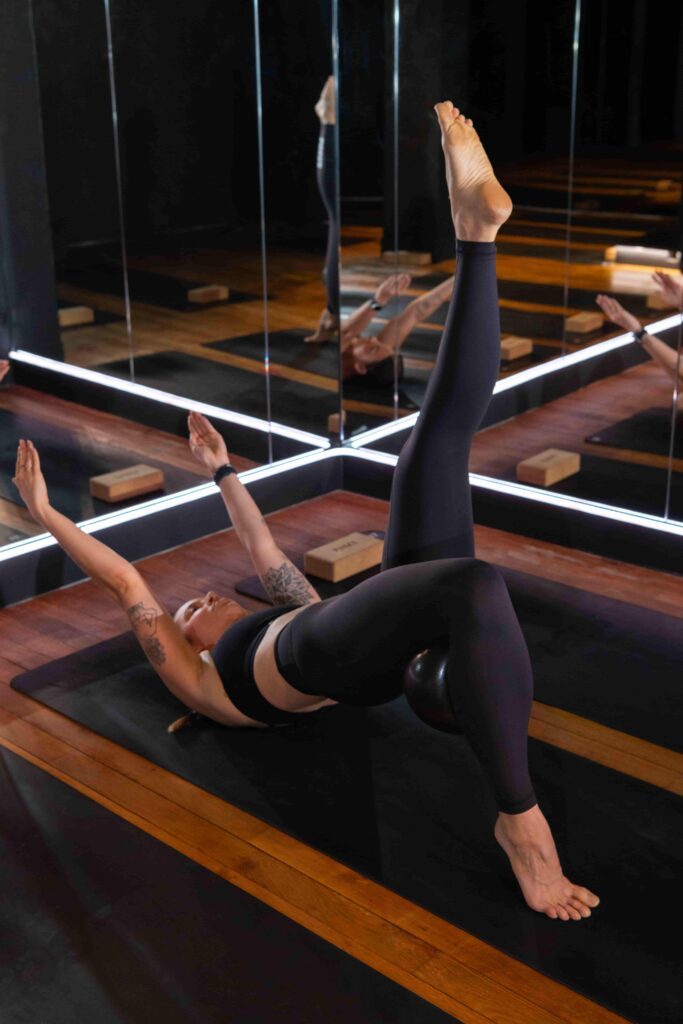
Respiration and Pilates are two completely complementary aspects that are important to master in practice. Therefore, it's not the same breathing as in yoga. To be able to apply it during exercises and optimise body movements, training is necessary, including awareness of posture and concentration on the core.
Initiated by Joseph Pilates, there Pilates method is an increasingly popular discipline. And yet, this method has not just been created. In fact, it emerged in England at the beginning of the 20th century. Its main aim was toto help the injured regain their bodily mobility through exercises targeting the abdomen, spine, and diaphragm during their re-education, thereby improving their physical benefits and posture.
Thus, Pilates is inspired bydance exercises, gymnastics, yoga, and thus allows for gentle work of the deep abdominal muscles, including the transverse and perineal muscles. The patients were assisted by means of machines and straps that support the pelvis and rib cage, accompanying the body during the execution of movements.
Joseph Pilates thus taught his method to various instructors around the globe, contributing to the creation of many Pilates studios, which caused it to grow significantly over the years!
There breathing in Pilates is an integral part of the process to excel in the discipline. So, the more you master Your diaphragmatic breathing, the more profound the exercises will have on your body, improving posture and awareness of your muscular core!
Joseph Pilates said it: “The breath is the first action of life, and the last. […] it is tragically regrettable to contemplate the millions of people who have not never learned to master the art of breathing properly.”
Breathing is thus the mantra of discipline. Nevertheless, you may struggle to apply the correct breathing technique during your first sessions, and that's completely normal. The Rigor and concentration are essential To master Pilates and strengthen your core!
In Pilates, the quality of breathing directly influences the execution of movements, as well as the ability to fully engage the abdominal centre, or “powerhouse”. In this sense, deep diaphragmatic breathing provides optimal stability to the pelvis, rib cage, and trunk, securing the exercises while intensifying their effectiveness and improving spinal posture.
Breathing in yoga
As you may know, the Pilates and yoga possess similarities but must nevertheless be clearly distinguished from one another. Indeed, several elements differentiate them, such as the way of breathing and specific body postures, and breathing is one of them!
Thus, breathing in Pilates and breathing in yoga are to be differentiated by their difference in rhythm and respiratory technique. Indeed, in yoga, all the exercises are punctuated by thedeep inhalation and exhalation, using both the diaphragm and the stomach, breathing in through both the mouth and the nose. As a general rule, one begins the movement with an exhalation so as to evacuate the surplus air present in the lungs and reduce stress.
THE Pilates as for him, he focuses more on the importance ofdeep exhalation in order to engage the transverse muscles and the core. Unlike in yoga, the inhalation does not need to be deep, allowing for better abdominal contraction and greater awareness of the diaphragm.
Beyond this distinction, it is important to note that in Pilates, inspiration is more directed towards the sides of the chest, thus avoiding overly superficial breathing in the upper chest and maintaining good spinal posture. The latter could generate unnecessary tension in the neck, shoulders, and rib cage.
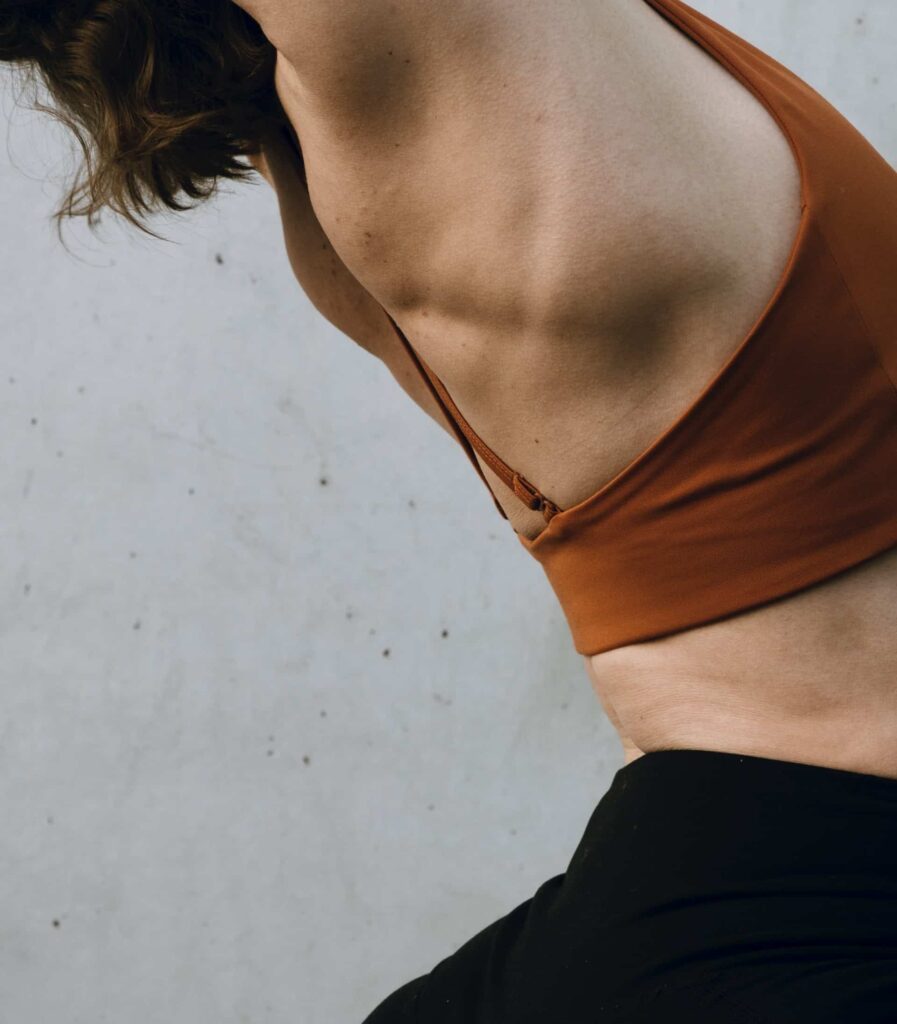
You understood, Pilates and breathing are two terms inseparable. We explain how deep breathing helps you in Pilates by improving your concentration and body awareness, and just how important it is mandatory to activate your abdominal and transverse muscles.
Breathing alone engages 3 muscles, also called stabilizing muscles :
Focusing on your breathing whilst doing Pilates exercises allows you to work these muscles effectively, whilst increasing your awareness of your core and strengthening your abdominal muscles. It also helps to secure the exercises and so avoid any risk of injury in the back, shoulders, and pelvis during practice.
To promote muscle activation, it is important to understand your body and its posture to find the right way to breathe. For this, you need to understand where the muscles are located and the pelvic floor muscles engaged during breathing.
Focus first on the good execution of the movement maintaining a correct posture, then apply the breathing on it By focusing on each position. The more you do things step by step, maintaining awareness of your body, the better you'll understand how it works.
Don't worry if you struggle. At the start of the practice, you will need to do a considerable effort of concentration to coordinate breathing and exercises, focusing on your core and the position of your spine. The more you practise and attend Pilates sessions, the more you will notice your body managing to do both fluidly at the same time.
To optimise your exercises, it is essential to synchronise your breathing with your movement. Start by taking a deep diaphragmatic breath before beginning the movement, then exhale when it becomes most intense. The exhale then acts as core support, facilitating the effort while strengthening the abdominal, transverse, and pelvic floor muscles.
The constant engagement of the abdominal «powerhouse» makes this synchronisation possible, and a slow exhale helps to refine spinal posture and improve body elongation.
To master your breathing, you need to engage in a learning process conscient, by adopting the correct breathing technique. Only regular training will make you progress and make your breathing a natural automatism for your body during your sessions of Pilates in our studio in Paris 9. We'll explain it all to you!
There chest breathing allows stabilisation of the pelvis and the torso, as well as the rib cage, while keeping the abdominal belt and the core contracted.
Put into practice :
Position yourself standing, by putting the hands on your ribs, That is, under your chest, adopting a good spinal posture. Stand up straight, with your spine right so as to make yourself as tall as possible. Exhale First of all through the mouth to breathe out the air from your lungs by engaging your diaphragm, then inhale gently through your nose filling your belly. You will feel your ribs expand; this means your lungs are filling with air and your rib cage is widening.
Exhale then, in a controlled manner, as if you wanted to mist, so as to exhale from the deepest part of your throat, engaging your perineum. Then, try to do raise your perineum, concentrating the effort in the centre of your body, as if you wanted it to touch your navel. To do this, draw in your stomach so that you feel your ribs tightening while tucking your shoulders, now good posture and supporting the spine.
Perform this pattern several times to understand your breathing so that it is slow And more and more fluid, focusing on each movement and your body's position!
To make this exercise even more intuitive, you can use an elastic band wrapped around your rib cage, which will aid abdominal contraction and correct posture. It will help you to feel the movement of your ribs as you inhale and exhale, thereby improving your body awareness.
It is recommended to carry out a exhalation through the mouth to make it more active and profound, engaging the diaphragm and transverse muscles. Nevertheless, it must not be too fast. Indeed, it can have a detrimental effect on the rib cage and create tension in the pelvic floor. Therefore, favour rather a slow exhalation through the mouth, while maintaining pelvic floor contraction.
Finally, the exhalation must be done when the effort is most intense, to activate the pelvic floor muscles, abdominal muscles, and strengthen the core for better posture.
By consciously multiplying breathing cycles, using the diaphragm, you allow your chest to develop its mobility while amplifying the oxygenation of your tissues. Be sure to visualise each inhale as a wave that extends into your chest and abdomen, and each exhale as a complete and soothing release, supporting your spine and posture.
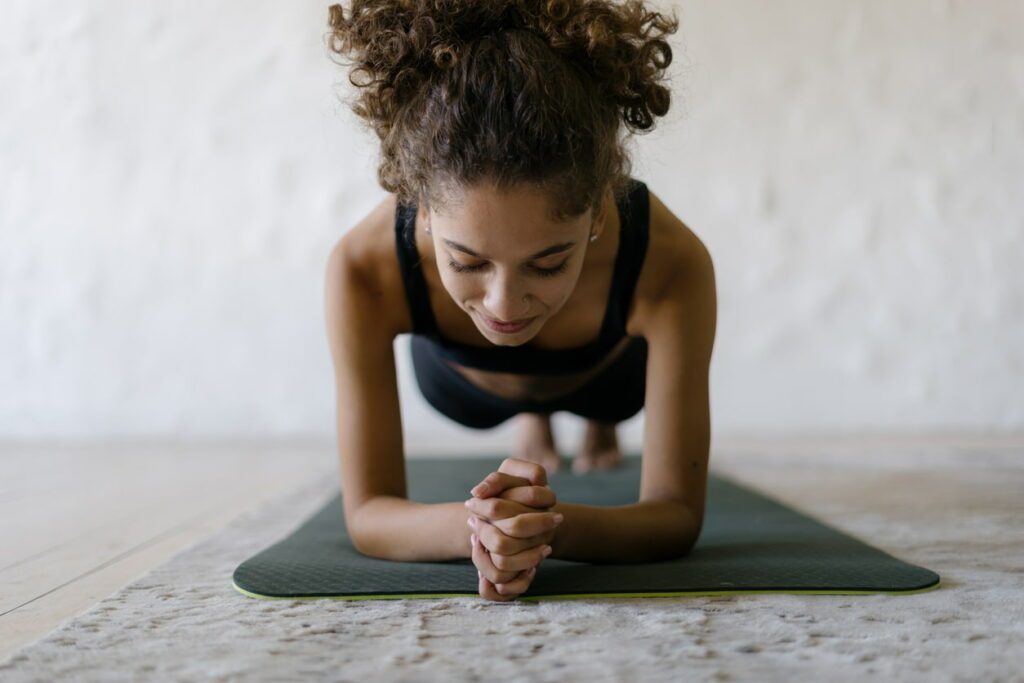
To summarize, Pilates is a sporting activity carried out from a optimal breathing and conscious. Indeed, breathing is therefore totally inseparable from the practice and must therefore be mastered to achieve proven results in Pilates, including better posture and an aligned spine. This includes controlled breathing, which will allow for do your stretches correctly, engaging the core and abdominal muscles.
It is important during practice for several reasons, including concentration and maintaining good posture:
To do this, breathing must be worked regularly, focusing on breathing technique and posture. This can be done through exercises that you can do at home or at any time of the day. If you can't find the time, take advantage of your Pilates sessions in our studio to put breathing into practice with concrete exercises!
You now have all the tools you need to learn to breathe consciously and fluidly, and to excel in the discipline of Pilates!
You are convinced by discipline and you are ready to put your breathing at the service of Pilates exercises You're in the right studio for effective sessions tailored to your body!
Discover Studio POSES and get addicted to Pilates Flow. Our coaches create just for you Unique flows accessible to all, with an emphasis on breath-synced movements. On the agenda: 50 minutes of paced workout through unique playlists, promoting concentration and body awareness.
come escape the time of your Pilates session, practicing mindful breathing exercises, and come out calm and relaxed, ready to face your daily life again without stress!
Pilates breathing primarily uses lateral breathing, which involves inhaling deeply through the nose, expanding the rib cage to the sides while keeping the abdominals engaged. Then, exhale forcefully through the mouth, narrowing the rib cage, often synchronising the exhalation with physical effort to engage the core. This technique optimises oxygenation without expanding the stomach and stabilises the trunk during movements. .
In Pilates, you inhale through the nose, expanding the sides of the rib cage, and then exhale through the mouth, closing the rib cage, which engages the abdominal muscles and protects the back. The inhalation happens before or at the start of the movement, and the exhalation accompanies the effort or the main movement. .
The five fundamental principles of Pilates are: concentration, deep breathing, body control, core centering, and precision of movement. They promote mastery, fluidity and efficiency of exercises to strengthen deep muscles and improve posture. .
The main breathing technique used in Pilates is lateral breathing, which involves expanding the rib cage while keeping the abdominals engaged. This method promotes core stability and is central to most Pilates exercises. Other techniques include percussive breathing, relaxation breathing, and effort breathing, adapted according to the intensity and type of exercise performed.