Summary Eye yoga is a set of gentle exercises that invite the gaze to move, blink, and rest at its own pace.


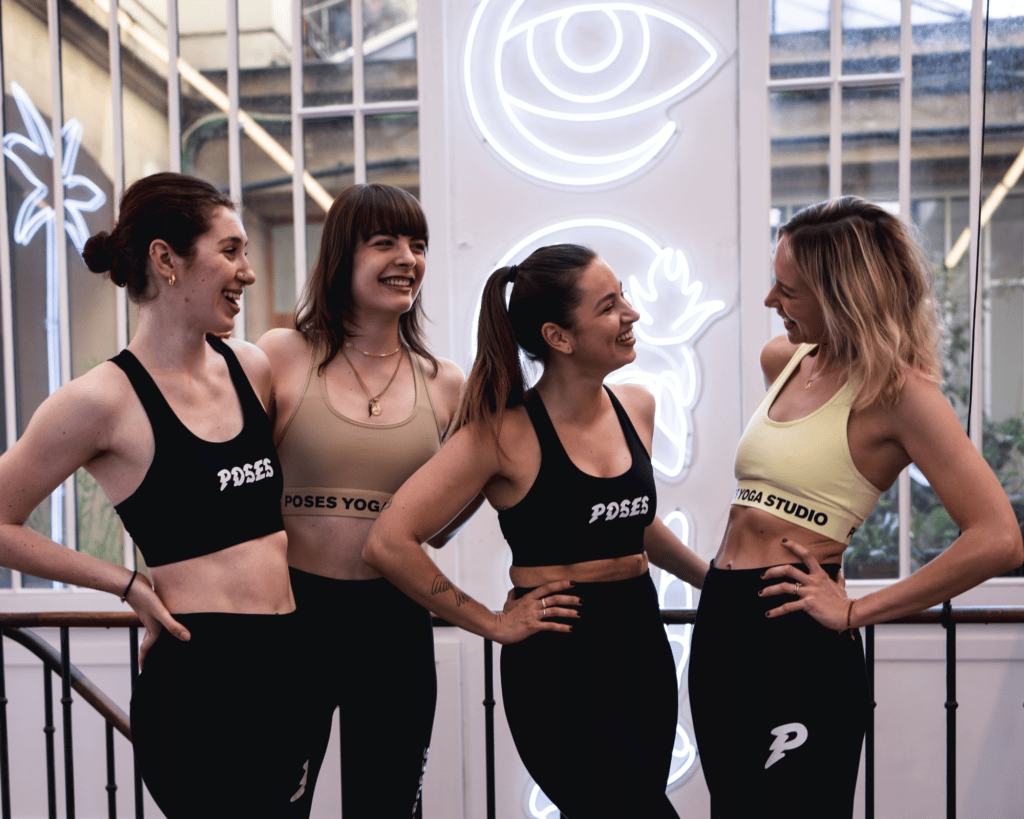
THE yoga of laughter It is a well-being practice that combines voluntary laughter with breathing exercises inspired by yoga. Here, no jokes or complicated postures are involved: we laugh for no reason, in a group, and the body does the rest. The idea may seem surprising or even intimidating. However, it is increasingly appealing to more and more people who are looking for a simple and joyful way to relieve stress.
You may be wondering what a session looks like, what this practice can bring you, or whether it’s right for you. In this article, we explain what laughter yoga is, where it comes from, what its benefits are, and how a class works. You’ll also find six easy exercises to try at home, precautions to know before getting started, and answers to the most frequently asked questions. We’ll guide you step by step.
Laughter yoga, also called hasya yoga («hasya» means «laugh» in Sanskrit), is a simple concept based on a combination of spontaneous laughter and deep breathing. During a session, you alternate between spontaneous laughter and deep breathing, guided by an instructor.
No funny story is involved. You don’t need to be in a good mood or have a sense of humor: the laughter starts as a gesture, then it takes hold. Anyone can get started with it, without humor or jokes. The body makes no difference between spontaneous laughter and simulated laughter.
At first, the laughter is played out. You launch it voluntarily, a bit like repeating a scale. Then the group has its effect: the gazes meet, someone chuckles, and the laughter becomes contagious. Within a few minutes, it transforms into genuine laughter, a group phenomenon.
The practice is based on four ingredients:
These deep breaths increase the oxygenation of the body and the brain.
Not in the way we usually hear it. You won’t find any dog with its head down or a greeting to the sun here. The connection with yoga comes from the breathing: each laugh exercise is followed by slow, expansive breaths, close to the pranayama that it is practiced on a mat.
Laughter yoga therefore occupies a special place among the Different types of yoga. It is not intended to replace a postural practice: it complements it, with a good dose of lightness.
Laughing yoga originated in India: its history began on March 13, 1995, when Dr. Madan Kataria, a doctor in Mumbai, gathered his wife Madhuri and three other people in a park in his neighborhood. The small group found itself laughing together: the first laughing club had just been founded, as it recounts. Laughter Yoga International.
The doctor’s observation is summed up in one sentence: laughter is good, whether it is spontaneous or induced. By associating it with breathing exercises derived from yoga, he has developed a method that is open to everyone, without requiring any equipment or physical fitness requirements.
The formula is popular and spreading quickly. Laughing clubs are multiplying in India and then in the rest of the world. Today, the practice is present in more than 120 countries, where it brings together thousands of practitioners, and a World Day of Laughter is celebrated every year on the first Sunday of May. In France, it is found in associative clubs, occasional workshops or corporate sessions.
Laughter is good for you; everyone has experienced it. Laughing yoga offers ways to trigger these effects instead of waiting for them to happen.
This is the first benefit sought. Laughter with a big smile releases the shoulders, jaw and stomach, where tensions like to gather. Laughter also reduces cortisol production and stimulates the secretion of endorphins, dopamine and serotonin. The deep breaths that follow prolong this relaxation.
Several Recent research work Furthermore, laughter practices have been associated with a reduction in stress and anxiety in adults. If you are looking for other ways to decompress, our article on anti-stress yoga It offers you several. This practice also supports the immune system, helps regulate sleep and promotes a more positive mindset to better cope with everyday life.
It’s hard to stay gloomy after twenty minutes of laughter. Many practitioners describe a sensation of lightness and energy upon leaving a session, with a positive effect that also extends to everyday life.
The group plays a big part in this: laughing together creates complicity, even between people who don’t know each other. We dare more, we take ourselves less seriously, and that lighter gaze often continues after the course. In this professional context too, sharing these laughs can fluidize relationships and improve the collective dynamics at work.
Laughter is also a small physical exercise. It works the diaphragm and the abdominal muscles, speeds up the heart a little and forces you to empty your lungs before taking a deep breath again. Laughter and deep breathing also support digestion and can improve the quality of sleep.
The result: a more relaxed breathing and a pleasant sensation of warmth throughout the body. They can also promote blood and oxygen circulation, help lower blood pressure and reduce the risk of heart disease. These effects are combined with certain benefits of yoga, whose work of breath is one of the pillars.
Keep your feet on the ground: Laughing yoga remains a form of well-being. It can help you feel better on a daily basis, but it does not replace medical advice or appropriate follow-up in case of a health issue.
A session is held in a group, led by a trained facilitator. A typical session lasts around 45 minutes, with slight variations depending on the group, and almost always follows the same pattern:
As for practical matters, be prepared with comfortable clothing and a bottle of water. No level is required: the only requirement is to accept the game and not judge yourself or others.
Here are six of the most well-known laughter yoga exercises. Count 30 to 45 seconds for each, then take two deep breaths before moving on to the next one.
This is the refrain of all the sessions. Clap your hands flatly, fingers against fingers, to a two-beat and then three-beat rhythm, chanting «ho ho, ha ha ha». The sound comes from the belly. This exercise serves as a warm-up and comes back between two laughs to revive the energy.
Walk into the room and greet everyone you meet: with your hands joined in front of your chest or a handshake, looking them in the eyes, and a laugh as a greeting. Are you alone? Say hello to your reflection in the mirror. The effect is guaranteed.
Put an imaginary phone in your ear and laugh as if you were being told the funniest story of the year. Move around, glance at others, and share your «call.» This is one of the simplest exercises to start with.
Hold two imaginary glasses. Pour the contents of one into the other while saying «hee», repeat in the other direction, then hold the glass to your mouth and «drink» while laughing out loud. The more exaggerated the gesture, the more laughter comes.
Inspired by a yoga pose, it relaxes the entire face. Open your eyes and mouth wide, pull your tongue towards your chin, place your hands like paws on each side of the face and laugh from the belly. Forget your image: that’s the goal. This exercise also helps to release tension and promotes letting go.
Start with a smile. Let a small, discreet laugh come, then increase the volume and the intensity until you reach a big burst of laughter. Then gradually decrease the volume until you return to the initial smile. This exercise shows how easily laughter can be controlled.
Yes. A few minutes in the morning are enough to try it out: perform two or three exercises in front of a mirror, breathing deeply between each one. Laughter will come more slowly than in a group, because the contagion is less strong. For a first time, a collective session remains the best choice.
Laughing yoga is suitable for most people, regardless of age or physical condition. However, laughing loudly and for a long time puts strain on the stomach, heart, and lungs. Ask your doctor for advice before practicing in the following situations:
During the session, listen to yourself. If you feel uncomfortable, in pain, or out of breath, take a break and breathe calmly. No one will blame you for smiling while others are laughing.
Laughter yoga provides rapid relaxation: most participants feel lighter and calmer after a session. The available research supports this, and several studies have reported positive effects, particularly on stress and anxiety. Its effects remain those of a wellness practice: they vary from person to person and are established with regularity.
No, neither one nor the other. Laughing yoga is not based on jokes, but on spontaneous laughter that becomes more pronounced thanks to the group. It does not involve any technical poses: if you can breathe and clap your hands, you are ready to begin.
A laughter yoga session usually lasts between 30 and 60 minutes, including a final relaxation period. The laughter exercises are short, lasting less than a minute each, and are alternated with periods of breathing exercises. At home, five to ten minutes are enough to feel the first effects.
Laughing yoga starts with a simple idea: there is no need to wait for a good reason to laugh. By combining voluntary laughter, breathing, and a playful spirit, this practice, born in India, offers an accessible way to release tension, regain energy, and create connection. It requires neither flexibility, equipment, nor comedic talent: just a little curiosity is enough.
The simplest thing is to try it. Try one or two exercises at home, then step into a comedy club to experience the experience in a group, where it takes on its full meaning.
At POSES, you won't find laughter yoga on the schedule, but the same desire to do good without taking yourself too seriously. Our yoga classes help you breathe, move, and release tension in a caring and open atmosphere for all levels. Want to prolong the relaxation on the mat? Discover the POSES Studio courses and book your first session.